Hardness
- Stainless steel
- ~200 HV
- Tungsten carbide (VP10X)
- ~1,600 HV
Material Comparison
A data-driven comparison of the two materials used in dental implant drilling: hardness, heat, durability, and cost at scale.
Hardness
Thermal conductivity
5-yr cost / 50 impl/yr
The debate between carbide and steel implant drills (sometimes called implant burs or osteotomy drills, depending on the manufacturer) comes down to material science. Stainless steel has been the default in dental implantology for decades, not because it’s the strongest performer on hardness or thermal conductivity, but because it’s inexpensive to manufacture, well-understood, and long-familiar to procurement teams.
Tungsten carbide is a compound of tungsten and carbon atoms arranged in a crystalline structure. It's one of the hardest materials available for surgical applications; the VP10X grade used in Crown Down drills is roughly 8× harder than surgical steel, with thermal conductivity 6× higher. These aren't marginal differences; they're order-of-magnitude improvements in the two properties that matter most during osteotomy.
Side-by-side comparison based on published material properties and clinical data from Crown Down tungsten carbide drills vs. standard surgical stainless steel kits.
| Feature | Tungsten Carbide (Crown Down) | Stainless Steel |
|---|---|---|
| Material hardness | ~1,600 HV30 (VP10X) | ~200 HV (Vickers) |
| Thermal conductivity | 110 W/m·K | 18 W/m·K |
| Cutting edge lifespan | Indefinite (no measurable wear) | ~20 clinical uses |
| Heat generation | Up to 6× less | High, requires irrigation |
| Drills per osteotomy | 2 (crown-down protocol) | 5 to 8 (sequential protocol) |
| Irrigation required | Not in most cases | Always |
| Replacement cost | $0/year (unlimited uses) | ~$20 per implant (~$1,000/year at 50 implants/year) |
| Implant compatibility | Universal, all systems | Typically brand-locked |
| Tactile feedback | Enhanced; clinicians report better bone density perception | Standard |
| Autoclave sterilization | No effect on performance | No effect on performance |
| Kit price | $3,495 one-time | $800 to $1,500 (typical) |
| Per-drill use limit | Unlimited | ~20 uses |
Cost at scale
5-year total drilling cost at five different implant volumes. At low volume, a steel kit is genuinely cheaper. Past ~23 implants/year, the recurring replacement line compounds and the delta grows sharply.
| Practice volume | Steel kit (5-yr) | Crown Down (5-yr) | You keep |
|---|---|---|---|
| OccasionalUp to 15 implants/yr · GP with occasional cases | $2,700 | $3,495 | Steel still cheaper on direct-cost math |
| Regular25 implants/yr · GP with implant caseload | $3,700 | $3,495 | $205Break-even in year 5 |
| Focused50 implants/yr · implant-focused GP | $6,200 | $3,495 | $2,705Break-even in year 3 |
| High volume150 implants/yr · periodontist or oral surgeon | $16,200 | $3,495 | $12,705~$3,000/yr recurring saved |
| Practice-wide300 implants/yr · full-arch / multi-operatory | $31,200 | $3,495 | $27,705~$6,000/yr recurring saved |
Occasional
Up to 15 implants/yr · GP with occasional cases
Regular
25 implants/yr · GP with implant caseload
Focused
50 implants/yr · implant-focused GP
High volume
150 implants/yr · periodontist or oral surgeon
Practice-wide
300 implants/yr · full-arch / multi-operatory
Steel cost modeled at $1,200 initial kit + $80 per replacement drill (~5 drill-passes per implant, ~20-osteotomy service life). Crown Down is a one-time $3,495 purchase. Run your practice's exact numbers →
Vickers hardness measures a material's resistance to deformation. At ~200 HV, surgical steel is hard enough to cut bone but soft enough that bone gradually chips and rounds the cutting edge. After approximately 20 uses, the drill's cutting geometry is measurably degraded.
VP10X tungsten carbide at ~1,600 HV30 (certified per ANNEX 9) is in an entirely different class. Bone cannot deform the cutting edge; it physically lacks the hardness to do so. This is why carbide drills maintain factory sharpness through unlimited clinical cycles. Every Crown Down drill is engineered for unlimited uses.
The trade-off is that tungsten carbide is brittle: it does not plastically deform under overload, so a small-diameter carbide drill used against dense cortical bone in a conventional pilot-to-final sequence can fracture. Crown Down publishes a dedicated clinical analysis of this safety problem in Wear-Proof Implant Drills: Myth or Truth?, which explains why the Crown Down architecture (largest cortical drill first, smaller trabecular drill only after cortical resistance is relieved) is what makes solid carbide safe in implant osteotomy.
Heat during implant drilling is primarily a function of two things: friction (sharpness) and thermal conductivity (how fast the material moves heat away from bone). Steel fails on both counts as it ages - dulling increases friction while its low conductivity (18 W/m·K) traps that heat at the osteotomy site.
Carbide's 110 W/m·K conductivity acts as a heat sink, continuously pulling thermal energy away from bone through the drill body. Combined with a permanently sharp edge that minimizes friction, the result is up to 6× less heat at the drilling site, verified through in-vitro thermal testing.
For a deeper look at the underlying material science, including a controlled bench experiment on heat transfer between carbide and steel drills, read Dr. Fudim’s editorial in Dental Tribune India.
Drag the slider: on the left, a stainless steel cutting edge after twenty 3 mm osteotomies in a dental stone bench test - rounded, chipped, and measurably degraded. On the right, a Crown Down solid tungsten carbide edge photographed after the accelerated wear challenge, with its cutting geometry intact. The two images come from different bench tests.
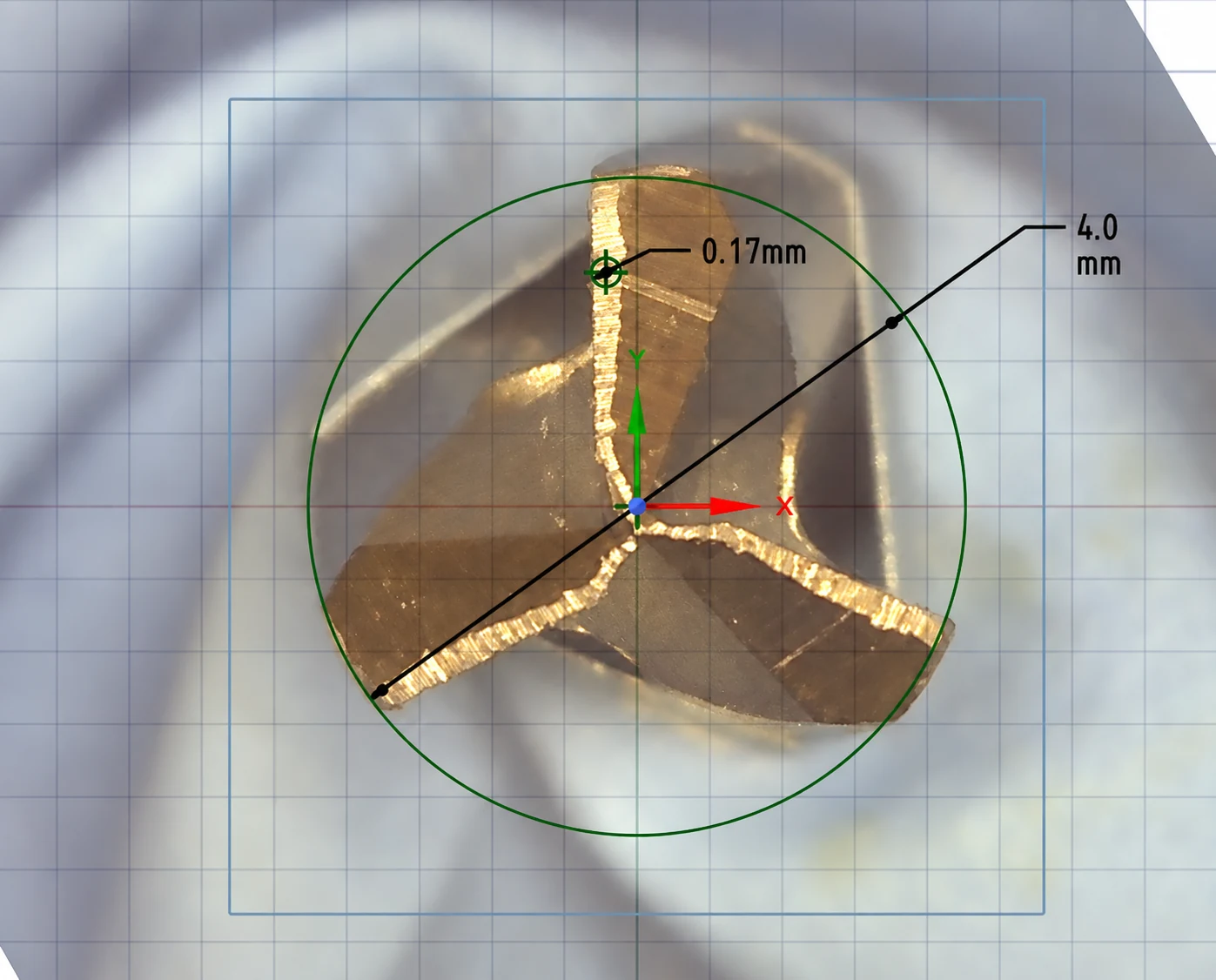
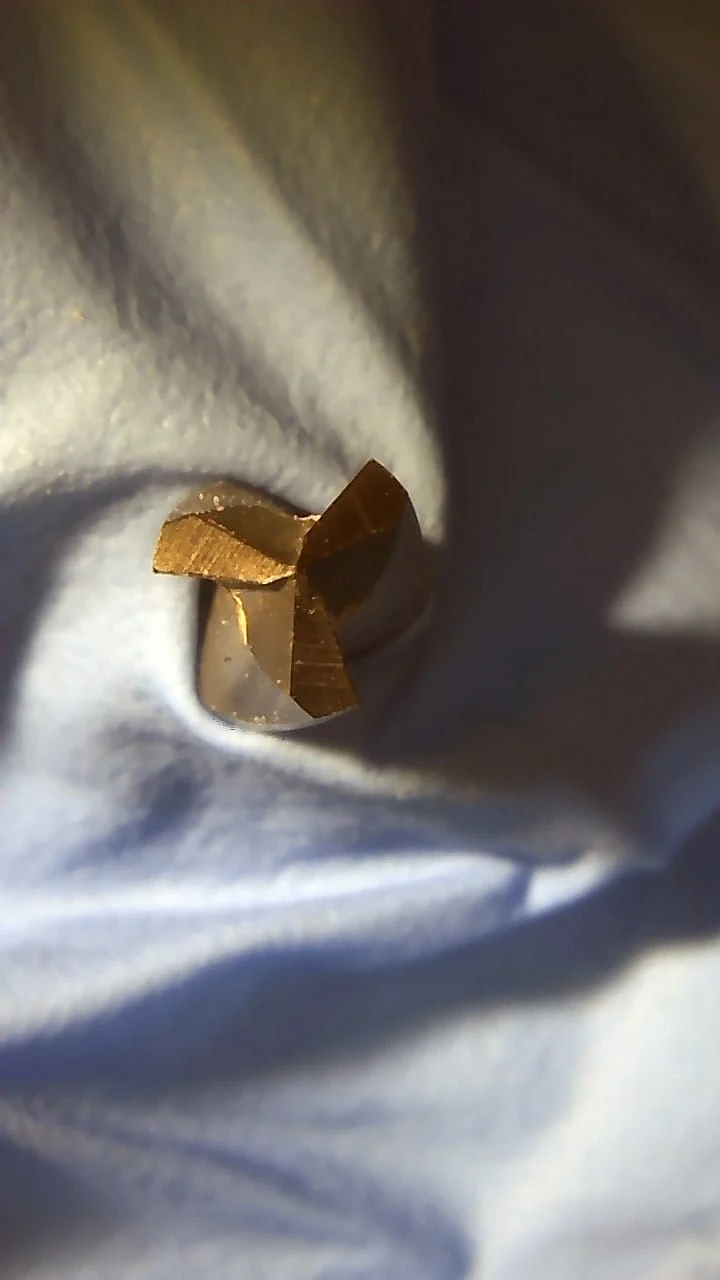
Microscope imaging from Crown Down in-vitro wear testing. Full methodology documented in How We Test Crown Down Drills.
Example at 50 implants per year, using the cost calculator's default inputs: $1,200 steel kit, $80 per replacement drill, 5 drill passes per implant, 20-osteotomy steel drill life.
Stainless steel kits
Crown Down (carbide)
See the Crown Down difference
One kit, two drills per site, and a wear-proof carbide system designed to eliminate routine drill replacement.
Stainless steel drills are cheaper upfront. That's their only advantage. On every metric that affects clinical outcomes and long-term economics (hardness, heat management, durability, replacement cost, and workflow efficiency) tungsten carbide is objectively superior.
The Crown Down system makes solid tungsten carbide practical for everyday implant practice. Two drills per site, universal compatibility, unlimited uses, and a one-time cost that pays back in about three years at 50 implants a year. The hardness and heat advantages matter most in the crestal layer, which is where the purpose-built cortical drill does its work. See the two carbide instruments in the dental implant drills page, the full assembly in the implant drill kit or surgical implant kit, or the template-based configuration on the guided implant drill kit page.
Both prepare an implant osteotomy. The difference is what the material makes possible: two drills per site instead of five to eight, no replacement cycle, and one tray that runs guided and freehand across implant systems.
Quick answers to questions clinicians ask most about this topic.
Keep reading
Explore related pages on the Crown Down dental implant drilling kit, protocol, and clinical science.
Testing Methodology
The rationale behind our accelerated drill-wear challenge: a 30-year career workload, a 3x safety factor, and microscope evaluation of the cutting edge.
Read moreClinical Analysis
Deep clinical analysis of tungsten carbide implant drills, the safety problem of a conventional ascending drilling sequence, and why the Crown Down architecture is required to make the material safe.
Read moreDrill Wear
The science of steel drill wear, and how carbide resists routine dulling.
Read moreContinue exploring the 2-drill carbide protocol.
Why Crown Down carbide drills carry a lifetime wear guarantee.
Read more2.7 million revolutions on Class III dental stone with a 3x career-workload safety factor.
Read moreThe metallurgy of drill-edge failure and what dulling does to osteotomy quality.
Read moreExplore Crown Down instruments, system-specific sizing charts and the requirements for your planned guided or freehand workflow.
Discuss kit options, system fit and the planned workflow