Dental Implant Surgical Kit

Dental Implant Surgical KitGUIDED OR FREEHAND. SAME TRAY.

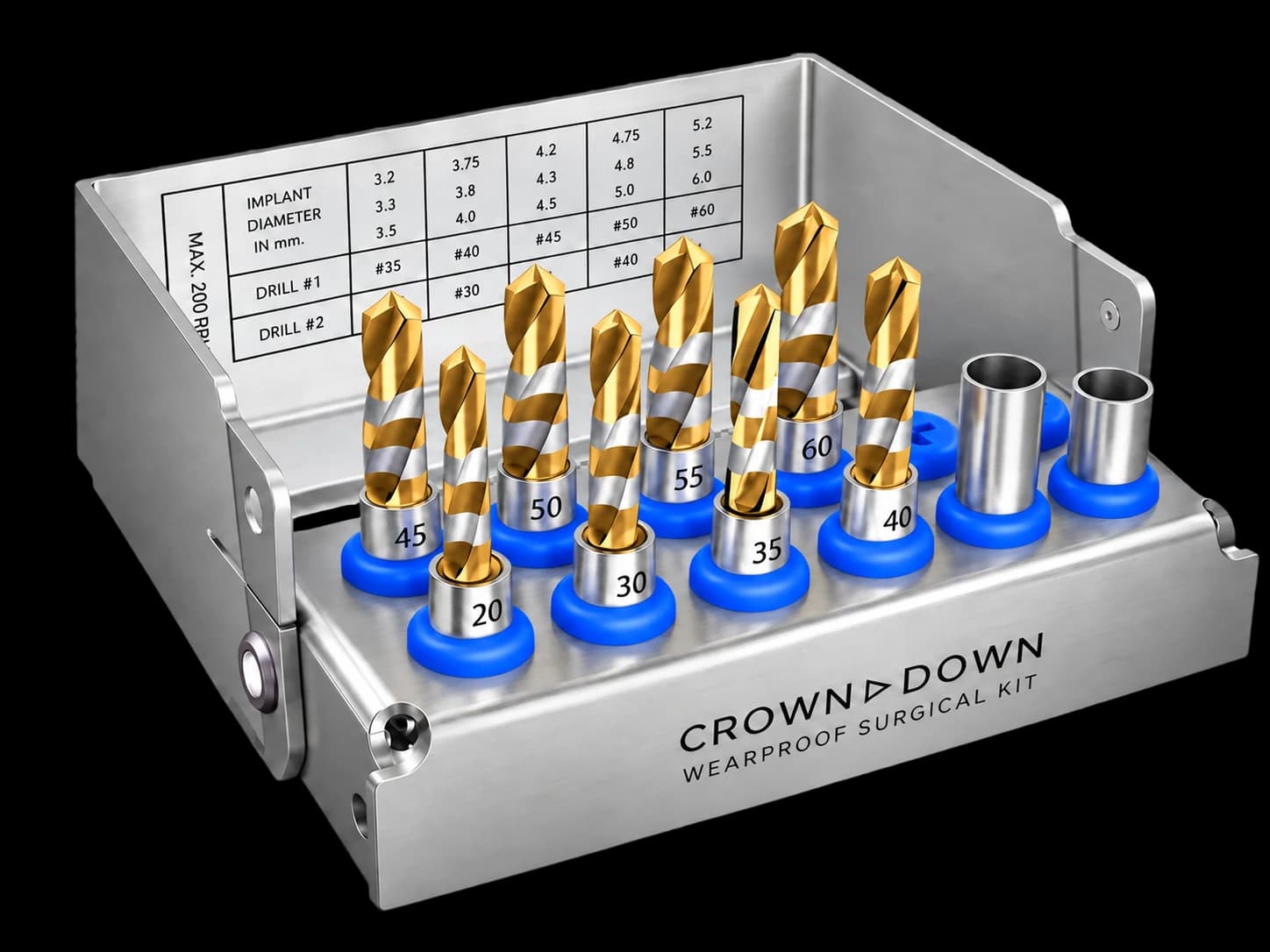
A tungsten carbide dental implant surgical kit built around the guided-surgery workflow. Two drills per site, coded 3D depth stoppers that seat into printed templates, and one tray that runs freehand when a guide isn't practical.

Free 15-min call · No commitment · Secure Stripe checkout

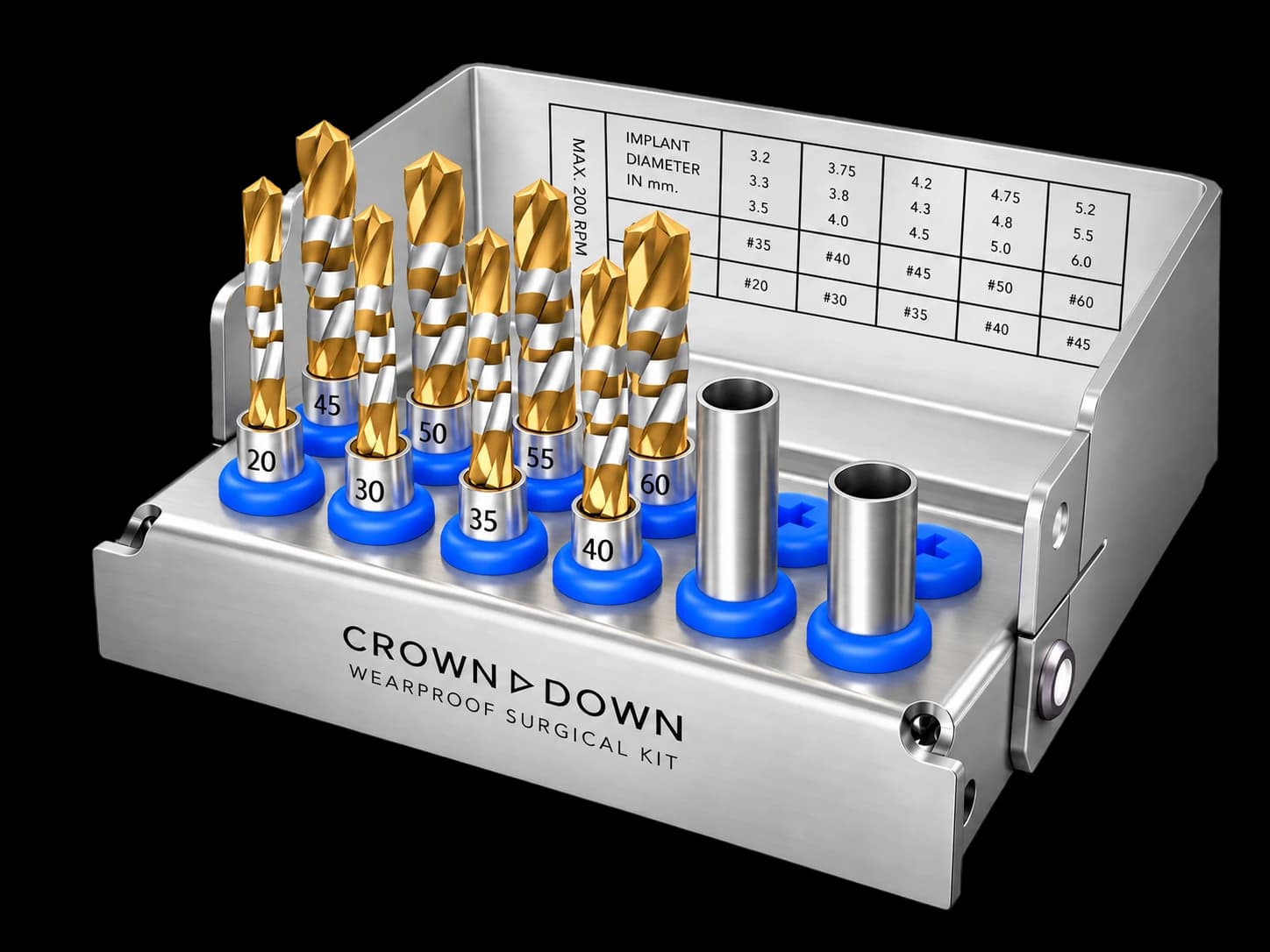
Crown Down surgical cassette loaded with gold tungsten carbide implant drills and depth stoppers
Featured inOral Health GroupOsseocompression vs osseodensification · August 2026

Live Clinical Case

Watch it cut dense D1 bone.

Two implant sites at lower right #45 and #47, prepared live with two tungsten carbide drills. No ascending sequence, no drill swaps between diameters.

Case
#45-47
Bone type
D1 cortical
Sites
Two premolar
Region
Dom. Republic

Case by Dr. Ernesto Antonio Pichardo Tejada, DDS · 18+ months of daily Crown Down use

  1. 01·0:00

    Cortical entry

    Matched-diameter drill clears the dense crestal cortex in seconds.

  2. 02·0:45

    Drill to depth

    Trabecular drill completes the site, no ascending sequence.

  3. 03·1:20

    Dense D1 site

    The hardest bone type most clinicians will ever prepare.

  4. 04·1:55

    Both sites done

    Two adjacent osteotomies prepared with the same 2-drill sequence.

Primer

What is a dental implant surgical kit?

A dental implant surgical kit is the sterile tray of instruments a clinician uses to prepare the osteotomy and place a dental implant. Most kits ship with 5 to 8 sequenced drills (pilot, twist, cortical, and countersink), color-coded depth stoppers, drivers, and organizing inserts, all sized to the specific implant system the kit is designed around.

The Crown Down dental implant surgical kit is built differently. Instead of a long sequenced protocol, it uses two solid tungsten carbide drills per site - one cortical, one trabecular - that pair with any major implant system. The same tray runs guided cases through a printed surgical guide and freehand cases without swapping SKUs, which is the workflow difference this page is about.

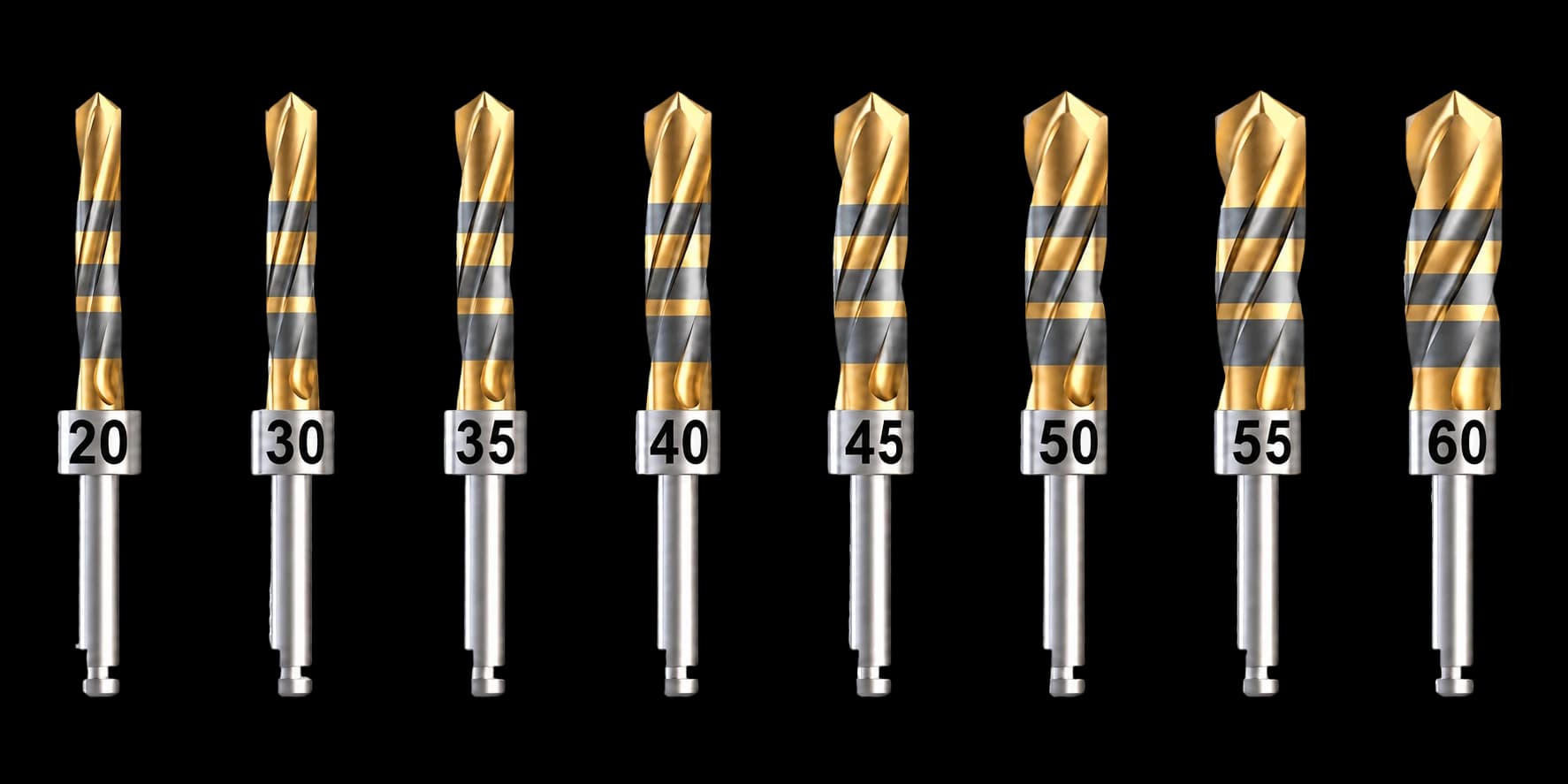
8 drill diameters

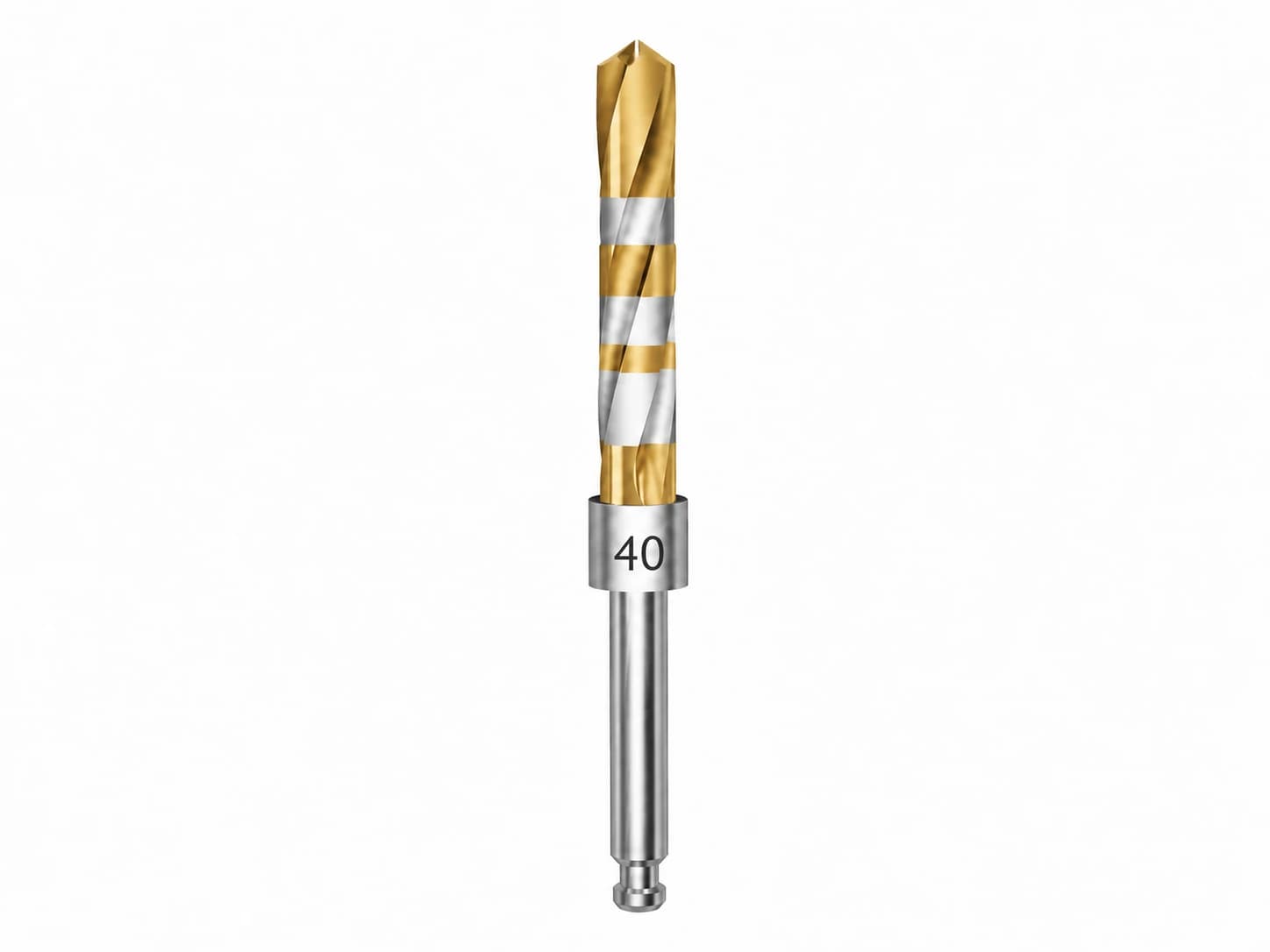
Ø 2.75 mm to Ø 6.0 mm (#20 to #60), solid tungsten carbide.

2 drills per site

Cortical drill (#1) then trabecular drill (#2). No pilot, no countersink, no ascending sequence.

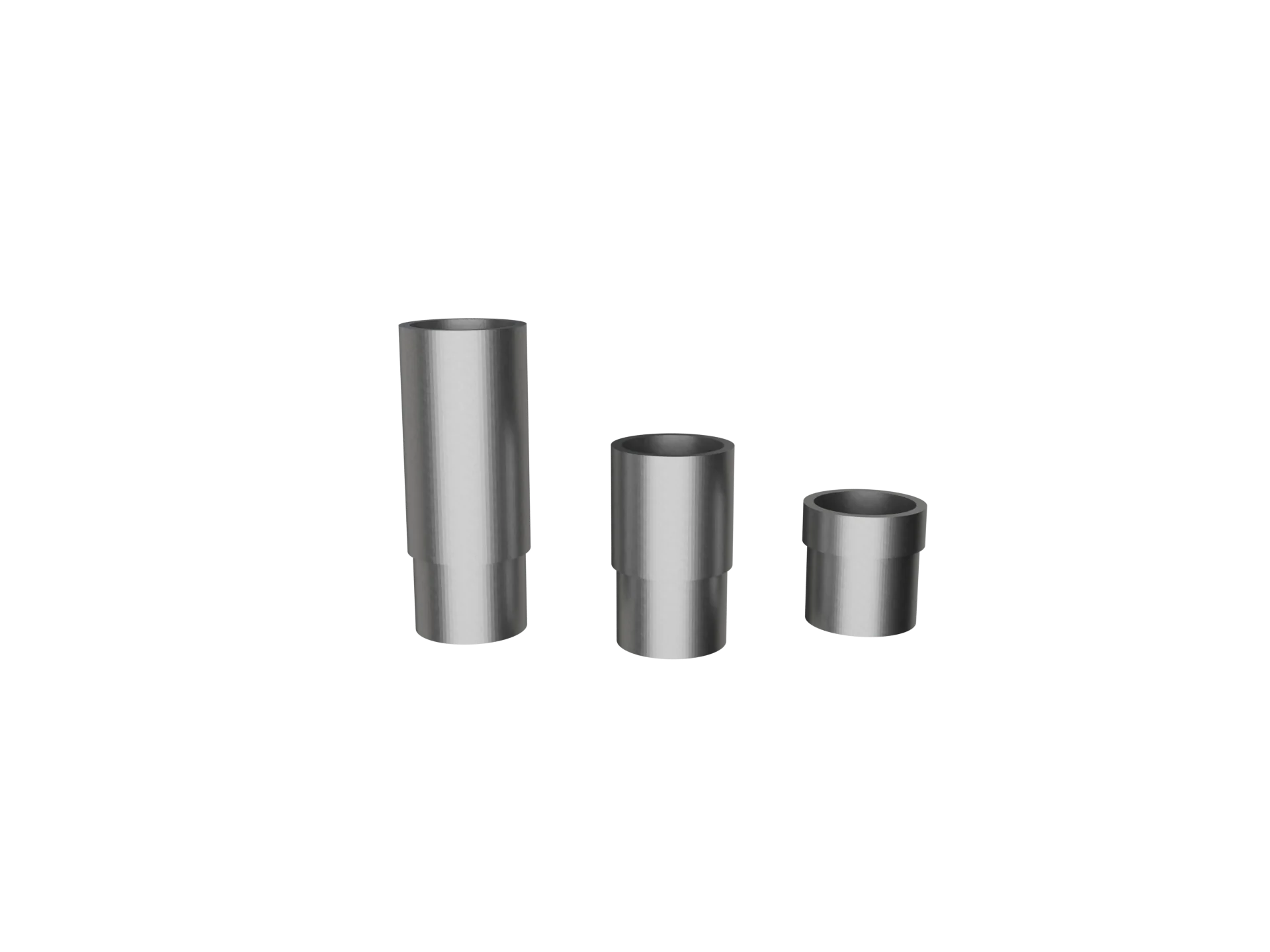
Coded 3D depth stoppers

8, 10, and 12 mm working depths. Seat into standard guided-surgery sleeves.

Universal implant fit

Compatible with Nobel Biocare, Straumann, Zimmer Biomet, Dentsply Sirona, Neodent, BioHorizons, and 20+ more.

Autoclavable

Standard steam sterilization. No PVD coating, no TiN surface, no special reprocessing.

One kit, guided or freehand

Same tray, same 2-drill protocol. No separate guided SKU, no second kit to open.

Surgical workflow

Built for the guided-surgery tray, not the sales brochure.

Most surgical implant kits were designed around a 5- to 8-drill steel sequence and freehand technique. That geometry is now working against modern implant surgery, where roughly half of cases involve a printed guide, and every extra drill change is another through-sleeve handover for the assistant and another opportunity for positional error.

The Crown Down implant surgical kit was built the other direction: from the guided workflow backward. Coded stoppers that seat into standard templates, a 2-drill protocol that shortens the through-sleeve portion of the case, and a single tray that reads at a glance for the assistant, whether the day’s schedule is guided, freehand, or a mix.

For a deeper walkthrough of the through-sleeve mechanics, planning-software compatibility, and depth-stopper geometry, see the dedicated guided implant drill kit page. For a drill-level breakdown of the two carbide instruments this kit runs on, see the cortical drill (drill #1) and the broader tungsten carbide dental implant drills reference, or compare kit configurations against the transactional implant drill kit page.

Coded depth stoppers seat into surgical guides

The stopper geometry drops directly into standard guided-surgery templates. One tray covers guided cases without a separate guided kit, so the assistant sets up the same way whether the case is planned or freehand.

Two drills through the sleeve, not eight

In a guided case every drill change means removing and reinserting through the surgical sleeve. Reducing the sequence to a cortical pass and a trabecular pass cuts through-sleeve handovers by 60 to 75 percent and shortens the guided portion of the case.

Same tray for freehand fallback

When a guide can't be seated or a case shifts intraoperatively, the same 2-drill protocol runs freehand. No second kit to open, no separate protocol to remember, no sterility break to reset the field.

Autoclavable, no coatings to degrade

Solid tungsten carbide throughout. There's no substrate, no PVD coating, and no titanium nitride surface to break down across sterilization cycles. Standard steam autoclave, no special reprocessing workflow.

What Makes Crown Down Different

What matters most to you in an implant drilling system?

Explore Crown Down from the perspective that matters most to your practice.

Built around the economics of long-term ownership.

Practice Economics

Fewer disposable purchases. One-time investment.

Solid tungsten carbide and a lifetime sharpness warranty replace the recurring drill-replacement line item with a one-time kit purchase.

See the 5-year ROI

Long-Term Cutting Performance

Drills that hold their edge, case after case.

Carbide is ~13x harder than surgical stainless steel and does not dull under normal clinical conditions; the same drill cuts as effectively in year five as it did on day one.

Carbide vs. steel

No Brand Lock-In

One kit, every implant system, guided or freehand.

Universal compatibility across all major implant systems - your kit isn't tied to a single implant supplier or their forced accessory cycle.

Explore compatibility
  • Practice Economics. Fewer disposable purchases. One-time investment. Solid tungsten carbide and a lifetime sharpness warranty replace the recurring drill-replacement line item with a one-time kit purchase. See the 5-year ROI
  • Long-Term Cutting Performance. Drills that hold their edge, case after case. Carbide is ~13x harder than surgical stainless steel and does not dull under normal clinical conditions; the same drill cuts as effectively in year five as it did on day one. Carbide vs. steel
  • No Brand Lock-In. One kit, every implant system, guided or freehand. Universal compatibility across all major implant systems - your kit isn't tied to a single implant supplier or their forced accessory cycle. Explore compatibility
  • Simpler Osteotomy. Two drills. One instrument change per site. The 2-drill protocol handles cortical and trabecular preparation with a single instrument change - fewer swaps, a simpler tray, and a more streamlined osteotomy. See the protocol
  • Thermal Control. Designed around lower heat generation. Solid tungsten carbide's higher thermal conductivity (~110 W/m·K vs steel's 18) evacuates heat away from the osteotomy during preparation. View thermal testing
  • Practice Differentiation. Confidence in your instruments. Pride in your practice. Advanced tungsten-carbide instrumentation signals a modern, evidence-based practice, and gives you predictable control every osteotomy. See what clinicians say

You’ve seen what Crown Down changes

Now see it in your hands.

A free 15-minute call: the drills, the 2-drill sequence, and which configuration fits your surgical workflow.

Workflow comparison

Guided vs freehand, from the same tray.

Most surgical implant kits force practices to maintain a guided SKU and a freehand SKU on two different trays. The Crown Down dental implant surgical kit runs the same 2-drill protocol both ways; the only difference between the two workflows is whether the coded 3D depth stopper is on the drill shank or not.

Workflow axisGuided caseFreehand case
Number of drills per site2 (cortical then trabecular)2 (cortical then trabecular)
Through-sleeve handovers2 per implant siteN/A - open osteotomy
Depth controlCoded 3D stopper seats on sleeveLaser-marked letter code on drill body
Drill body geometryFits standard metal guide sleevesSame drills, stopper removable
Case setup changeAdd coded stopper to shankRemove stopper; read depth mark
Assistant tray layoutSame two drills + 3D stopper setSame two drills, no stopper
Conversion mid-caseGuide breaks or seats poorly?Same kit, no SKU swap
SterilizationStandard steam autoclaveStandard steam autoclave

For the mechanics of the through-sleeve portion of the case, see the dedicated guided implant drill kit page. For the freehand technique and the 2-drill protocol itself, see the 2-drill osteotomy protocol.

Who It’s For

Who Crown Down Is For

Crown Down is built for dentists who want a smarter way to prepare implant osteotomies, not a slightly-different version of the same drill kit.

  • Freehand Implant Dentists

    Clinicians placing freehand implants who want better tactile feedback and a faster, simpler osteotomy.

  • Guided Surgery Users

    Practices running fully or partially guided cases who need a drill kit that pairs cleanly with stoppers and surgical guides.

  • Clinics Tired of Dull Drills

    Teams done with replacing dull steel drills, juggling reorder cycles, and tracking sterilization counts.

  • Multi-System Practices

    Dentists working across multiple implant systems who want a single drilling kit that doesn't lock them into one brand.

  • 2-Drill Protocol Adopters

    Practices ready to simplify osteotomy preparation from a long sequence to two tungsten carbide drills per site.

  • Bone Graft Collection

    Dentists who want to collect a larger volume of clean autogenous bone chips during osteotomy preparation, without adding a separate harvesting procedure.

The System

The Crown Down Implant Drilling System

The Crown Down system includes 15 mm and 20 mm surgical kits, individual tungsten carbide drills from Ø 2.75 mm to Ø 6.0 mm, and 3D stoppers for guided osteotomy preparation. One purchase covers your full case mix, with no recurring replacement budget. See what’s inside the implant surgical kit.

15 mm Surgical Kit - CD-KIT-L015 - Crown Down tungsten carbide implant drilling kit

CD-KIT-L015

15 mm Surgical Kit

2-drill tungsten carbide kit with 15 mm drills.

20 mm Surgical Kit - CD-KIT-L020 - Crown Down tungsten carbide implant drilling kit

CD-KIT-L020

20 mm Surgical Kit

2-drill tungsten carbide kit with 20 mm drills.

Individual Drills - #20 – #60 - Crown Down tungsten carbide implant drilling kit

#20 – #60

Individual Drills

Solid tungsten carbide, Ø 2.75 to Ø 6.0 mm. Sold individually for misplaced or lost drills.

3D Stoppers - Guided surgery - Crown Down tungsten carbide implant drilling kit

Guided surgery

3D Stoppers

Three-dimensional drill control for guided osteotomy preparation.

Sterilization & reprocessing

Standard autoclave. No special handling.

The Crown Down dental implant surgical kit reprocesses on the same standard steam autoclave cycle a practice already runs for its handpieces, mirrors, and probes. There is no separate cassette, no dedicated cycle, and no drill drying step. The drills are solid tungsten carbide end-to-end, so nothing on the cutting edge changes across sterilization cycles.

That matters because steel and coated implant drills degrade at the sterilization stage in two documented ways. TiN (titanium nitride) surface coatings wear off preferentially at the cutting edge, which is exactly where the drill needs the coating most. PVD coatings on complex geometries can delaminate under repeated thermal cycling. Both mechanisms create a drill that looks fine to the naked eye but has already lost its clinical cutting behavior.

Monolithic tungsten carbide sidesteps that entirely. The same cutting edge that leaves the factory is the cutting edge that runs the case, cycle after cycle, and Crown Down backs the material with a wear-performance guarantee for the life of the kit.

Reprocessing at a glance

Cycle
Standard steam autoclave, 134 °C / 273 °F, 3 minutes minimum hold.
Cassette
Stainless steel tray with silicone drill inserts. No proprietary cassette required.
Between cases
Ultrasonic bath, standard enzymatic cleaner, rinse, package, autoclave. Same reprocessing workflow as any surgical instrument.
Coating check
None required. Drills are solid tungsten carbide with no PVD or TiN surface layer.
Wear inspection
Visual only. See the accelerated wear-testing methodology on How We Test Crown Down Drills.

Another Approach

A different way to think about the drilling sequence

You already have a drilling system that works. The question isn’t whether Crown Down replaces it. It’s whether it gives you another useful option worth considering alongside it.

Thermal profile

Heat evacuation during drilling

Solid tungsten carbide’s higher thermal conductivity (around 110 W/m·K vs. steel’s 18 W/m·K) draws heat away from the osteotomy during preparation. Learn about implant drilling heat.

Long-term ownership

Drills that hold their edge

Carbide drills maintain cutting performance across repeated cases, so periodic drill replacement isn’t a recurring line item on the practice’s supply budget.

Simpler workflow

Two drills per osteotomy

The 2-drill protocol handles cortical and trabecular preparation with a single instrument change per site: fewer swaps, cleaner tray flow, faster turnover.

Curious what this would look like in your practice?

Run your own numbers, or book a 15-minute call.

Or see the full carbide-vs-steel spec & cost comparison →

Universal compatibility

One kit, every implant system.

The Crown Down dental implant surgical kit is engineered around implant diameter, not implant brand. Every drill in the tray (Ø 2.75 to 6.0 mm) has a documented pairing to each major implant system’s recommended drilling sequence, so a practice that places multiple systems does not need a separate surgical kit per brand.

  • Nobel Biocare
  • Straumann
  • Zimmer Biomet
  • Dentsply Sirona
  • Neodent
  • BioHorizons
  • Camlog
  • Astra Tech (EV)
  • MegaGen AnyRidge
  • Osstem
  • Southern Implants
  • Bicon

Plus 12+ additional systems documented in the compatibility chart. The full drill-to-implant pairing for each brand (including Camlog, Astra Tech EV, and MegaGen AnyRidge) is on the dedicated implant compatibility chart page.

Clinical Evidence

Clinical Evidence Behind Crown Down

The 2-drill tungsten carbide protocol is backed by internal material testing, thermal measurement, and ongoing clinical use across implant systems.

1,000-Cycle Bone Testing

1,000 osteotomy cycles each in bovine rib, pig rib, and bovine tibia at 22°C. No visible wear damage observed across all three internal tests.

Peer-Reviewed Literature

Independent studies on implant drill material, heat, and repeated-use degradation: Koo 2015, Mendes 2014, Harris & Kohles 2001, Yalcin 2025.

5-Year Clinical Case

Documented 5-year follow-up of a Neodent GM implant placed with the Crown Down protocol in a complex medically-compromised patient.

Disclosure: Internal testing was performed on benchtop bone substrates under controlled drilling conditions and is intended for comparative reference. Clinical outcomes depend on operator technique, drilling parameters, and case-specific anatomy. Clinicians should follow their training and clinical judgment when selecting drilling protocols.

Wondering if the ROI works?

See when a Crown Down surgical kit pays for itself.

A traditional surgical kit is cheaper on day one, then the replacement drills start. Plug in your annual case volume to see when the $3,495 Crown Down kit breaks even, or when it doesn't.

7 clinician reviews and counting

  • Two years in and I haven't replaced a single drill.

    I switched to Crown Down two years ago and haven't replaced a single drill. My implant site prep is noticeably faster and I have much better tactile feedback through the bone.
  • My assistants noticed the difference on day one.

    The 2-drill protocol cut my osteotomy time significantly. My assistants noticed the difference on day one: fewer instruments to manage, faster turnover between patients.
  • 18 months of daily use and the drills still cut like new.

    I was skeptical at first, but after 18 months of daily use the drills still cut like new. The heat reduction is real, and my patients report less post-op discomfort.
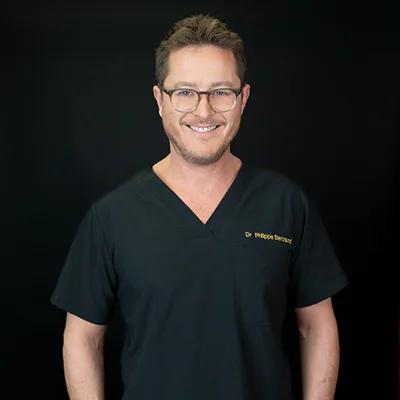
  • That line item is simply gone now.

    What sold me was the economics. I used to budget for replacing dull drills every quarter, and that line item is simply gone now. The carbide holds its edge case after case, and the consistency that gives me during osteotomy prep is worth as much as the savings.
    Dr. Philippe Bertrand, dental implant clinician
    Dr. Philippe Bertrand

    Montreal, Canada

  • My team adapted to the protocol within a week.

    Going from a full sequential tray down to two drills changed how my surgical days run. There is less to set up, less to track, and my guided cases flow faster without sacrificing accuracy. My team adapted to the protocol within a week.
    Dr. Ramin Mirmooji, dental implant clinician
    Dr. Ramin Mirmooji

    Pierrefonds, Canada

  • The thermal difference is something I can feel through the handpiece.

    The thermal difference is something I can feel through the handpiece, and I see it in how cleanly the sites heal. Preserving bone vitality matters to me, and being able to collect autogenous chips on the same pass has made grafting in my practice far more straightforward.
    Dr. Gadi Kalihman, dental implant clinician

    Dr. Gadi Kalihman

    Kiryat Gat, Israel

  • Same torque, different bone, different biology.

    This is one of the principles behind the Crown-Down technique: by selectively reducing cortical interference, insertion torque may better reflect the true mechanical contribution of the medullary bone while reducing excessive crestal compression. Same torque, different bone, different biology.

Buy With Confidence

Try it on your first cases. Full refund if it doesn’t outperform your current drills.

Return & refund policy

60-day clinical trial

Use the kit on your first cases. If Crown Down doesn't outperform your current drills, full refund - we pay return shipping.

Wear-performance for life

After the trial, drills are guaranteed against loss of cutting performance under normal clinical use.

FDA cleared

Class II surgical instrument. Regulatory documentation ships with every order.

Ships worldwide

$100 flat-rate shipping to every country we deliver to. Stripe checkout, tax at cart.

The Kit

We built the drill without the blind spot.

Eight solid tungsten carbide drills. A 2-drill protocol that runs guided or freehand. No replacement cycle to plan around, no drill-life math to reconstruct after the fact.

Crown Down surgical cassette loaded with gold tungsten carbide implant drills and depth stoppers
8 drills · #20–#60
From$3,495One-time · ships worldwide
  1. 01

    No replacement cycle

    Cutting performance guaranteed for the life of the kit. No blind spot to worry about.

  2. 02

    Solid tungsten carbide

    Eight drills, ~13× harder than surgical steel.

  3. 03

    Universal compatibility

    Fits every major implant system: Nobel Biocare, Straumann, Zimmer Biomet, Neodent, BioHorizons, Dentsply Sirona, MegaGen, Osstem, and more.

  4. 04

    15 or 20 mm lengths

    Same 2-drill protocol, matched to your osteotomy depth.

  5. 05

    Guided or freehand

    3D depth stoppers lock into sleeved guides for planned cases. The same 2-drill sequence runs freehand when you don't have a guide. One kit, either workflow.

View kits & pricing
About

About Crown Down

Founded by Dr. Zvi Fudim, Crown Down develops surgical drilling systems that address the core challenges dentists face with implant integration. Our technology draws on decades of clinical practice and materials science to deliver instruments that are more durable, thermally efficient, and cost-effective than conventional stainless steel alternatives.

Dr. Zvi Fudim, Founder & CEO at Crown Down

Dr. Zvi Fudim

Founder & CEO

Implant dentist and inventor of the Crown Down system, with decades of clinical and materials science experience.

John Ter-Mesropian, Co-Founder at Crown Down

John Ter-Mesropian

Co-Founder

Leads operations, manufacturing, and product delivery.

Ron Fudim, CTO at Crown Down

Ron Fudim

CTO

Leads engineering, product development, and the Crown Down technology platform.

Compatible With Major Implant Systems

Crown Down is a universal implant drilling kit compatible with Nobel Biocare, Straumann, Zimmer Biomet, MIS, BioHorizons, Osstem, and other major implant systems.

  • Solid tungsten carbide implant drills
  • Up to 6x less heat in internal thermal testing
  • Eliminates routine drill replacement caused by normal dulling
  • Guided and freehand osteotomy preparation
  • Developed, tested, and used in clinical practice
Crown Down solid tungsten carbide dental implant drill set, sizes #20 to #60, diameters 2.75 mm to 6.0 mm

See the difference for yourself

Join the clinicians who’ve eliminated routine drill replacement and simplified their osteotomy workflow.

FAQ

Dental implant surgical kit, answered

The most common questions clinicians ask before switching to the Crown Down dental implant surgical kit.

Still have questions?

Get answers and your practice-specific ROI on a free 15-minute call.

Not ready for a call?

Get the free Crown Down Clinical Guide

Everything on this site in one printable reference - read it between patients, share it with your associates.

  • The carbide-vs-steel breakdown (110 vs 18 W/m·K thermal conductivity)
  • The 2-drill osteotomy protocol, step by step
  • 5-year cost comparison against steel drill replacement cycles

One email with the guide link. No newsletter, no spam.

Contact

Speak With Our Team

Want to see how much you'd save, join a call, or talk through compatibility with your implant systems? Book a call or send us a message and we respond within one business day.

Free 15-minute consultation • No commitment

Send an Inquiry

We typically respond within one business day.

By submitting, you agree that we may contact you regarding the Crown Down system.